Comparison
Hologram Display vs LED Screen vs Projector: Which Is Right for Your Business?
Hologram displays, LED screens, and projectors can all be effective commercial display technologies, but they solve different problems. The right choice depends on what you need the display to accomplish.
Choose a hologram display for a distinctive floating visual, a 3D product showcase, or an experiential element. Choose an LED screen for a large, bright, conventional display for video, text, presentations and signage. Choose a projector for a flexible large image in controlled indoor environments. Some installations combine more than one.
On this page
At a glance
- Hologram display Floating, object-focused, experiential visuals
- LED screen Readable, conventional, information-dense display
- Projector Flexible large imagery where projection conditions suit
- Combined Some installations use more than one
Hologram display vs LED screen vs projector at a glance
| Factor | Hologram display | LED screen | Projector |
|---|---|---|---|
| Floating-image appearance | Yes | No | Not without specialized effects |
| Conventional video playback | Possible, but not ideal for all content | Excellent | Excellent |
| Detailed text / presentations | Limited | Excellent | Excellent |
| 3D product visualization | Strong use case | Possible | Possible |
| Large-format image | Large single-unit or multi-display systems, depending on the application | Excellent | Excellent |
| Bright indoor environments | Depends on model and content | Generally strong | Depends heavily on projector output and ambient light |
| Portable options | Yes | Yes, depending on system | Yes |
| Temporary deployment | Strong for portable units | Depends on size | Strong |
| Real-time input | Available on compatible models | Yes | Yes |
| Best use case | Experiential visuals | General-purpose display | Large projected imagery |
Important: display quality, brightness, portability, installation complexity and cost vary significantly by specific hardware. This table compares the general characteristics of each technology rather than every available product.
The comparison
The right question isn’t which technology is best.
Hologram displays, LED screens and projectors overlap in what they can show, but they solve different visual problems. The most useful way to compare them is not to ask which one is universally “better.” Ask what job the display needs to perform.
A hologram display is strongest when the visual itself should become the focal point: the centerpiece of a trade-show booth, a hero product or launch in retail, or an isolated 3D product shown without a rectangular screen around it.
An LED screen is strongest when clarity and information density matter: detailed product information, specs and pricing, conventional signage and menus. A projector is strongest when the goal is flexible large imagery, such as a temporary backdrop, wall-scale visuals or projection mapping, where projection conditions suit. Large presentations can work on either.
Many installations don’t choose just one. When a single system shouldn’t perform every role, a mixed installation gives each technology the role it suits. The right choice depends on the application, the environment and the content.
The best display is the one that matches the job.
What each technology is best at
Hologram display
Best when visual differentiation matters.
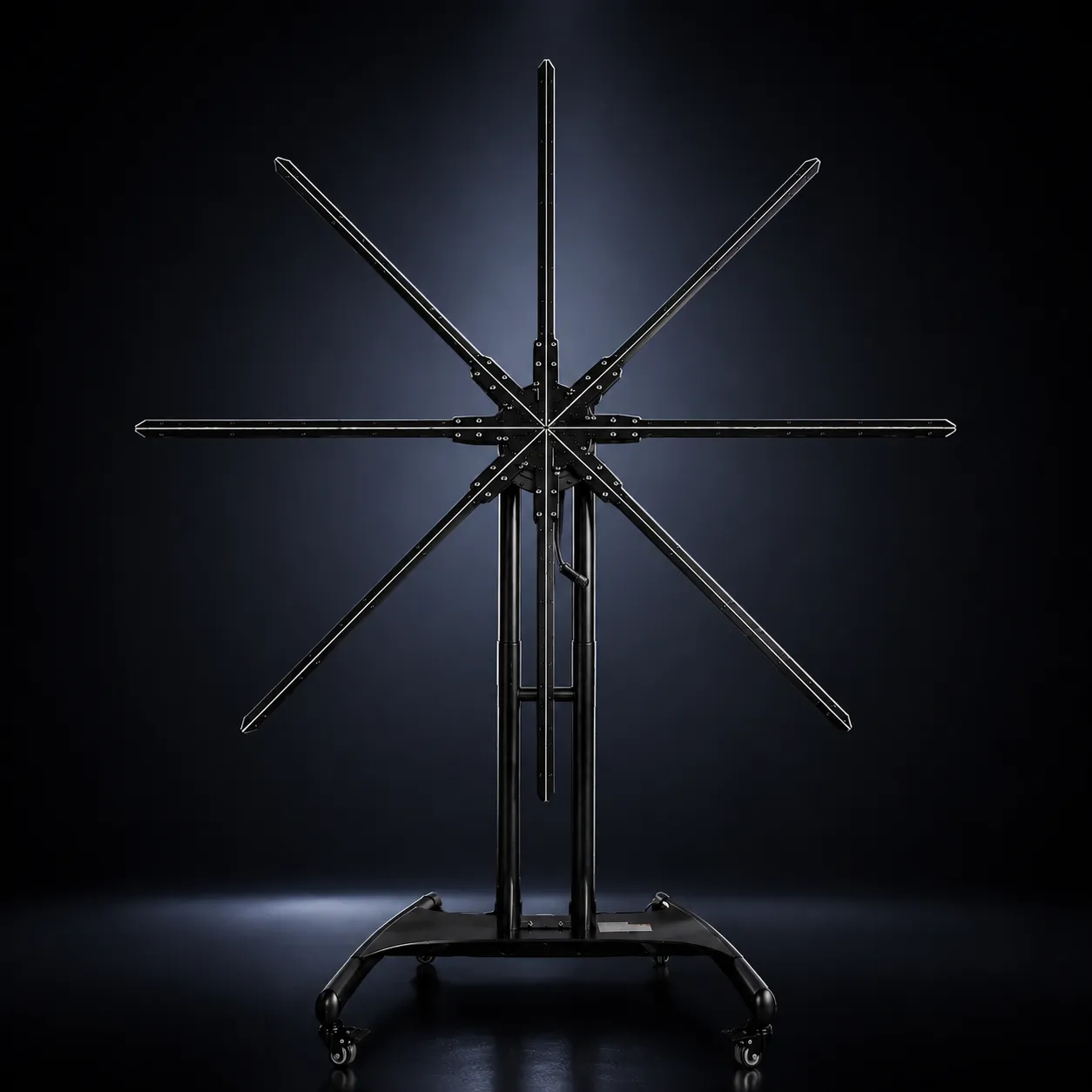
Rotating LED blades create the appearance of imagery floating in the display area, with no rectangular screen around it.
Strong at
- Drawing attention to a product
- Showing a product as a floating 3D object
- Differentiating a booth or window
- Showcasing products too large to bring
Weaker when
- Detailed text or presentations dominate
- Conventional full-screen video is the main content
LED screen
Best when information density matters.
An array of light-emitting diodes forms the image on a flat surface, from commercial screens to modular video walls.
Strong at
- Detailed text, data and dashboards
- Presentations and conventional video
- Digital signage, menus and pricing
- Large event screens
Weaker when
- The goal is an object without a frame around it
- A large wall must travel: panels, processors, cases, labor
Projector
Best when flexible large-format imagery matters.
A light source and optics cast the image onto a surface, so very large images need no equally large panel.
Strong at
- Presentations, classrooms and meetings
- Temporary event backdrops
- Projection mapping and stage visuals
- Covering very large surfaces
Weaker when
- Ambient light is bright or uncontrolled
- Surface, distance or color work against the image
Comparison lab
Same product, three technologies
All three can show a 3D product render. What changes is how the product is framed, how much it can say, and what it takes to deploy.
Hologram display
- Visual isolation
- The object appears without a surrounding rectangular screen
- Readability
- Limited for detailed text
- Scale
- Large single-unit or multi-display systems, depending on the application
- Footprint
- Compact standalone units; larger systems need more planning
- Setup
- Stand or project-specific mounting
- Viewing environment
- Depends on brightness, content contrast and ambient light
LED screen
- Visual isolation
- Inside a rectangular canvas
- Readability
- Strong: a stable canvas for text and data
- Scale
- From small screens to modular video walls
- Footprint
- Large walls need panels, processors, cases and cabling
- Setup
- From simple all-in-one displays to complex modular installations
- Viewing environment
- Commonly used in bright commercial environments
Projector
- Visual isolation
- Inside a projected image; a projection surface is usually required
- Readability
- Strong when light can be controlled
- Scale
- Very large images without an equally large panel
- Footprint
- A small projector can be very portable; needs a surface
- Setup
- Simple on a tabletop; ceiling mounting, alignment and mapping add complexity
- Viewing environment
- Sensitive to ambient light, which can reduce contrast
General characteristics, not test results. Side-by-side footage is published once it is filmed.
In practice
Different tools for different jobs.
All three technologies can show overlapping content, but they create different viewing experiences.
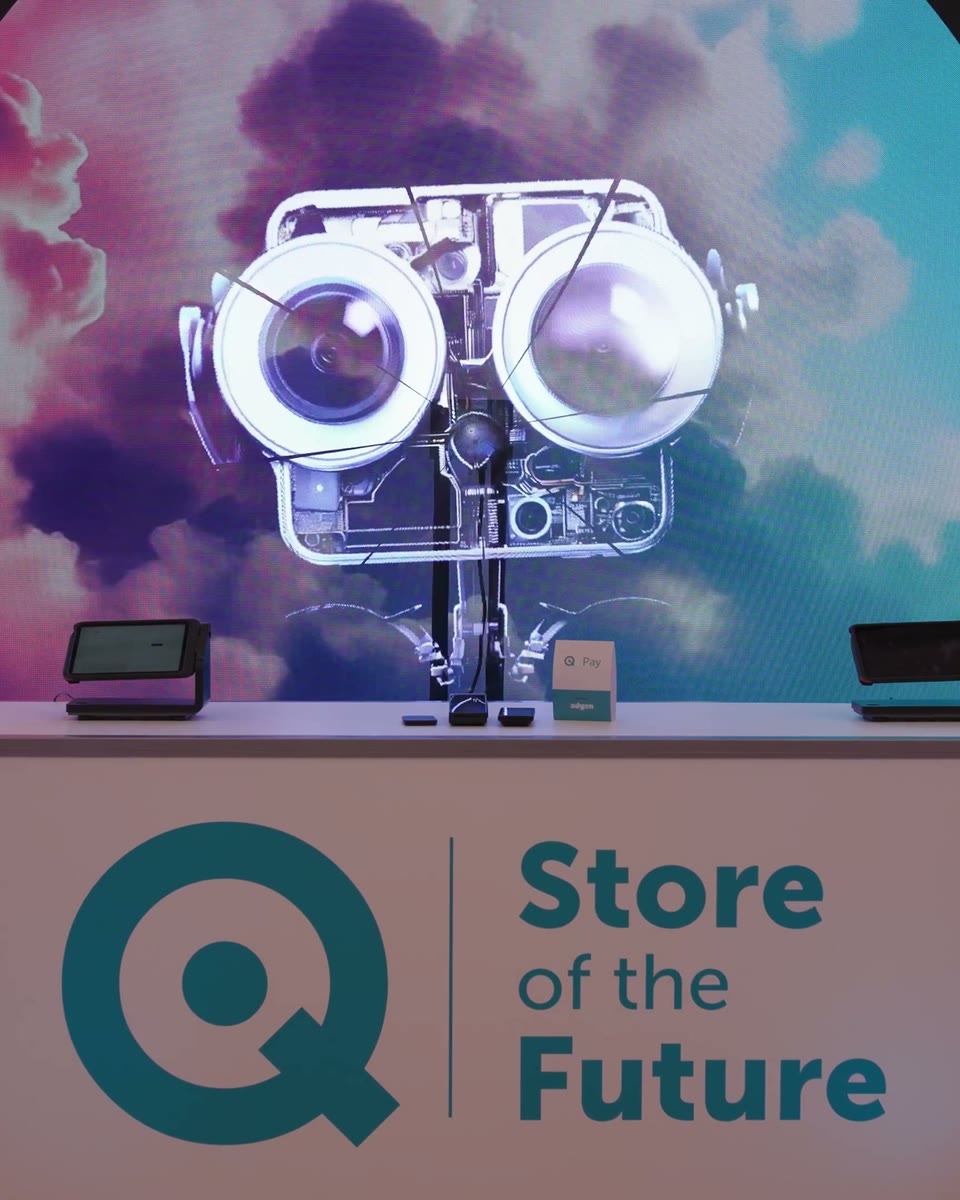
A hologram display makes the most sense when a product, object, character, logo or visual effect should become the focal point, without a conventional rectangular screen around it.
An LED screen stays stronger when detailed information has to remain clear and readable: text, presentations, signage and conventional video.
A projector is stronger when large flat imagery, projection mapping, temporary visuals, presentations or wall-scale imagery are the priority, and projection conditions are suitable.
So the better question is often not which technology replaces the others, but what role each one should play.
Trade-show example
LED wall=Main presentation
HOLOFAN=Product focal point
Often more effective than expecting one technology to perform every role.
Deployment factors: there is no universal winner
Brightness, portability, installation and cost depend more on the specific system than on the technology alone.
Bright environments
Depends on the actual hardware.
Bright, isolated objects generally perform better than darker or low-contrast visuals.
Portability
Depends more on system size than technology.
Compare the complete deployment system, not just the display.
Installation
Compare standalone with standalone, and system with system.
Cost
Varies too widely to call one technology cheaper.
Which technology delivers the required visual outcome with the least unnecessary infrastructure?
“Immersive” means different things
A hologram display creates a sense of novelty because the visual appears disconnected from a conventional screen. A large LED wall creates immersion through scale. Projection creates it by covering very large surfaces or entire rooms.
Which technology should your business choose?
Specific decision routes, beyond the broad goals above. Use this as a starting point.
This is not a universal rule. Your environment, content, viewing distance, audience, budget and installation constraints should determine the final system.
Where HOLOFAN fits
HOLOFAN focuses on commercial holographic display systems for applications where conventional screens are not the only option.
 App / WiFi displaysLooping contentRetail displaysProduct showcasesRecurring promotionsPortable installations
 HDMI displaysLive source contentInteractive experiencesExternal media/server inputDynamic playbackReal-time visual systems
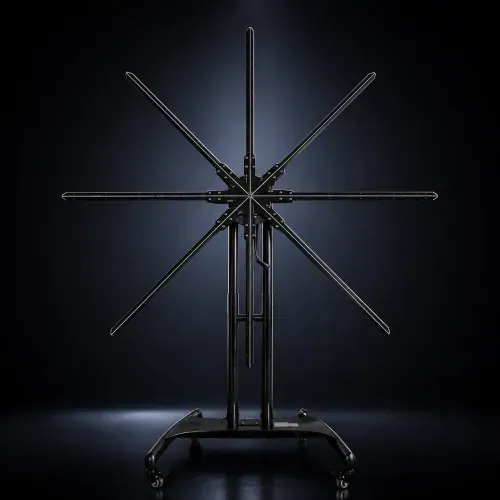 Large-format displaysLarger focal visualsEventsBrand activationsLarger commercial environments
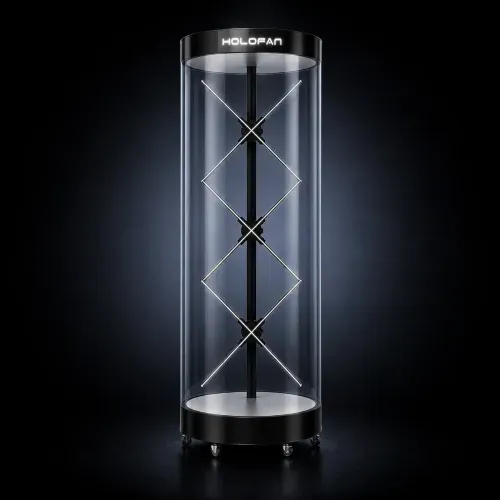 HOLOHUMAN™Human-scale visualsDigital charactersVirtual presentersBranded ambassadors
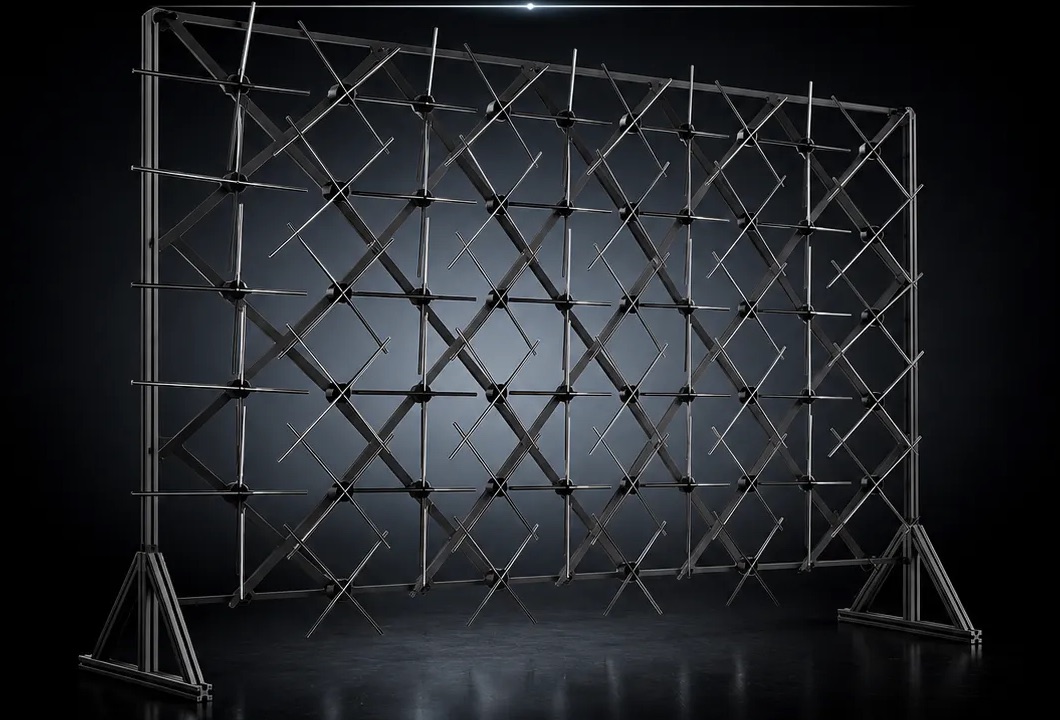 HOLOWALL™Modular multi-display installationsLarger holographic compositionsVisual centerpieces
HOLOFAN first-party comparison
One visual. Three technologies. Controlled and bright indoor light at 6 ft and 12 ft.
Hologram display
LED screen
Projector
Evaluated: visibility, text readability, object presentation, setup, footprint, packed size and content experience. Observations are reported by use case; there is no universal winner.
Real-world HOLOFAN examples
How it performs in real commercial environments.
FAQ
Frequently asked questions.
Short answers to the questions buyers ask most.
How do I choose between a hologram display, LED screen, and projector?
Start with the job the display needs to do. A hologram display suits floating visuals and 3D product showcases, an LED screen suits bright, conventional video, text and signage, and a projector suits flexible large images in controlled indoor environments. Many installations combine more than one.
Which display technology is best for a trade show?
There is no single best technology for every booth. Holographic displays are useful for product focal points and unusual visual experiences. LED screens are useful for presentations and large-format content. Projectors can work well when projection conditions are appropriate.
Can I use a hologram display and LED wall together?
Yes. The technologies can complement each other. For example, an LED wall can handle presentation content while a holographic display highlights a product or branded visual.
Which technology is best for showing a physical product?
If the objective is to show a 3D digital representation of a product, a holographic display can create a distinctive floating-object effect. If detailed specifications, videos, pricing or multiple content panels are required, an LED display may be more appropriate.
Which technology is most immersive?
It depends on the type of immersion. A hologram display creates object-focused immersion, a large LED wall creates immersion through scale, and projection can create environment-focused immersion by covering very large surfaces or entire rooms.
Which technology works best outdoors?
This depends heavily on the exact hardware and environment. Outdoor LED displays are specifically engineered for high brightness and weather exposure. Most holographic fan and projector installations require more controlled conditions unless the specific hardware is designed for outdoor use.
About HOLOFAN
Commercial holographic displays, content and support.
HOLOFAN provides commercial holographic display hardware, custom visual content, large-format holographic systems, and deployment support for retail, trade shows, events, installations, and enterprise applications.
About this guide
About HOLOFANContinue learning
Go deeper on holographic displays.
Ready to Build a Holographic Display?
Explore HOLOFAN's holographic displays for retail, trade shows, events, product showcases, and enterprise installations.